 By Osman Blake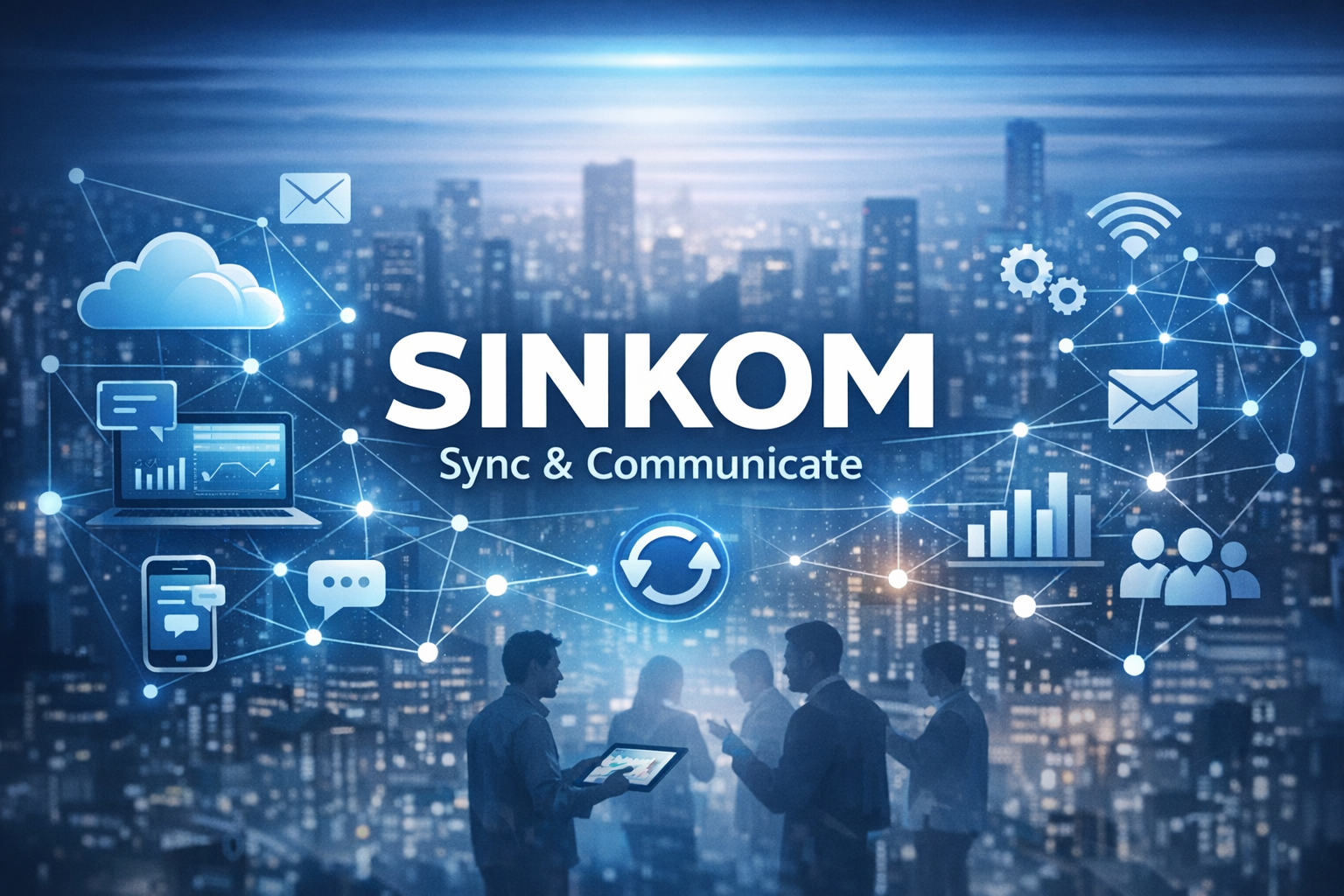
If you’ve recently come across the word sinkom, you’re not alone.
It’s one of those terms that feels a little mysterious at first. Short. Catchy. Slightly technical. And yet… flexible. Depending on context, sinkom can refer to a brand concept, a digital system, a communication tool, or even a startup identity built around synchronization and communication. The word itself sounds like a blend of “sync” and “com” — synchronization + communication.
And honestly, that’s probably the heart of it.
In today’s world, everything is about connection. Devices talk to each other. Teams collaborate across time zones. Systems integrate. Data moves constantly. Sinkom, as a concept, fits right into that space — the space where things connect and stay in sync.
Let’s unpack it in a simple way.
What Is Sinkom?
At its core, sinkom can be understood as:
A system, platform, or concept built around synchronized communication and connected processes.
It’s not limited to one industry. That’s what makes it interesting. You might see it used in tech environments, digital platforms, business communication tools, or even branding for startups focused on integration solutions.
Think of it like this:
-
Sync = keeping things aligned
-
Com = communication
-
Sinkom = aligned communication
Simple. But powerful.
And in a world where miscommunication costs time and money… alignment matters a lot.
Why Sinkom Feels Relevant Today
We live in a time where:
-
Teams work remotely
-
Data updates in real time
-
Businesses rely on cloud systems
-
Automation is everywhere
Without synchronization, everything breaks down. Imagine:
-
A sales team using outdated pricing
-
A warehouse system not updating stock levels
-
A project manager missing status changes
Small disconnects turn into big problems.
That’s where sinkom-like systems come in — tools and frameworks designed to keep information flowing correctly and consistently.
But it’s not just technical.
It’s cultural too.
Companies now care about clarity. Transparency. Real-time updates. Instant notifications. And yeah… fewer awkward “Wait, I didn’t get that email” moments.
Core Features Often Associated With Sinkom Systems
While the term itself may vary in meaning depending on context, here are the common features typically associated with sinkom-style platforms:
-
Real-time data synchronization
-
Cross-platform integration
-
Cloud-based accessibility
-
Automated updates
-
Team collaboration tools
-
Centralized dashboards
-
Notification systems
-
API connectivity
And sometimes AI-based optimization. But let’s not overcomplicate it.
The main idea? Keep everyone — and everything — aligned.
How Sinkom Concepts Show Up in Different Industries
The beauty of something like sinkom is that it’s adaptable. It can apply to multiple fields.
Here’s a simple breakdown:
| Industry | How Sinkom Concepts Apply | Example Use Case |
|---|---|---|
| Technology | Real-time data sync | Cloud storage auto-updates |
| Healthcare | Patient record integration | Shared medical databases |
| Finance | Transaction synchronization | Instant payment confirmations |
| Education | Learning platform updates | Student progress tracking |
| Retail | Inventory system syncing | Live stock visibility |
| Logistics | Shipment tracking | Real-time location updates |
See the pattern?
Every industry needs synchronized communication. Just in different forms.
The Human Side of Sinkom
Now here’s something important.
We often think of synchronization as purely technical. Servers. Code. APIs.
But it’s human too.
Miscommunication inside teams is one of the biggest productivity killers. People assume things. Forget things. Misread messages. And suddenly, deadlines slip.
Sinkom-style solutions aim to:
-
Reduce confusion
-
Increase transparency
-
Create shared visibility
-
Improve accountability
And honestly… that matters more than flashy tech features.
Because no matter how advanced a system is, if humans don’t understand what’s happening, it fails.
Why Startups Love the Sinkom Identity
There’s also something branding-wise about the word “sinkom.”
It sounds:
-
Modern
-
Tech-forward
-
Clean
-
Minimal
And short brand names are valuable right now. Especially in SaaS and digital service spaces.
A name like sinkom suggests:
-
Integration
-
Connectivity
-
Digital harmony
-
Efficiency
It gives a startup flexibility to grow into different markets without being too niche.
And that’s smart branding.
Benefits of Sinkom-Based Systems
Let’s make this practical.
If you’re running a business, here’s what sinkom-style systems can actually improve:
-
Faster decision-making
-
Fewer internal errors
-
Better customer experience
-
Reduced operational costs
-
Improved team collaboration
-
Real-time performance tracking
-
Seamless workflow automation
But… it’s not magic.
Implementation matters. Training matters. System design matters.
Even the best sync tools fail if teams don’t use them properly.
Challenges You Shouldn’t Ignore
It’s easy to talk about benefits. But there are some challenges too.
And it’s better to be honest.
1. Integration Complexity
Older systems don’t always play nicely with modern platforms.
2. Data Security
When everything syncs in real time, security becomes critical.
3. Over-Automation
Too many automated alerts? People start ignoring them.
4. Cost
High-end synchronization tools can get expensive.
And sometimes companies adopt “sync solutions” without actually knowing what problem they’re solving.
That’s risky.
Is Sinkom the Future?
In a way… yes.
But not because of the word itself.
Because of what it represents.
The future is connected. Integrated. Real-time.
Businesses can’t afford delays in information flow anymore. Customers expect instant updates. Employees expect clarity. Leadership expects dashboards that reflect reality — not last week’s numbers.
So systems built around synchronization and communication aren’t optional anymore.
They’re becoming standard.
Practical Signs Your Business Needs Better Sync
If you notice these, it’s probably time:
-
Team members frequently ask for updates that should already be visible
-
Multiple versions of the same document exist
-
Inventory mismatches happen often
-
Customers receive outdated information
-
Reports take too long to compile
-
Departments operate in silos
That’s usually a sync problem.
Not a talent problem.
Not a motivation problem.
A system problem.
Simple Steps to Move Toward a Sinkom Approach
You don’t need a massive overhaul overnight.
Start small:
-
Audit your current communication tools
-
Identify repeated miscommunication patterns
-
Centralize critical data sources
-
Automate one repetitive workflow
-
Train your team on one unified system
And build from there.
Slow integration is often better than chaotic transformation.
The Bigger Picture
At the end of the day, sinkom isn’t just about software.
It’s about alignment.
When systems align — operations improve.
When teams align — productivity improves.
When communication aligns — trust improves.
And trust is something no automation tool can manufacture.
So whether sinkom becomes a specific brand, a platform, or simply a concept people adopt… the idea behind it is solid.
Stay connected.
Stay synchronized.
Stay clear.
Because in a noisy world full of data, clarity wins.
Always.
And maybe that’s what sinkom really stands for.